

Program 2026
| Time | Program Point | Invited Guests |
| 08:30 | Welcome & Registration | |
| 09:00 | Keynote 1: The Science of Norms, and the Norms of Science: Questioning What We Take for Granted | Dr. Léïla Eisner (CH) |
| 10:00 | Coffee Break | |
| 10:30 | Workshop 1: Research with sensitive populations - Lessons learned from the Forensic Psychology context with female forensic patients | Prof. Dr. Vivienne de Vogel (NL) |
| Workshop 2: AI Delegation in Academia: Mapping Practice, Setting Guidelines, Imagining the Future | Prof. Dr. Nils Köbis (DE) | |
| Workshop 3: Challenging Common Assumptions through Ethnographic Research: Examples from Early Childhood Interventions in the Global South | Prof. Dr. Gabriel Scheidecker (CH) | |
| 12:00 | Lunch Break at CO13 | |
| 13:15 | Academic Speed Dating at Kannenfeldpark | |
| 14:00 | Group Picture! | |
| 14:15 | Poster Session and Coffee Break | |
| 16:00 | Keynote 2: Beyond Fragmentation: Building Cumulative Psychological Science Through Theoretical Integration | Prof. Dr. Marco Brambilla (IT) |
| 17:00 | Closing Remarks and Poster Awards | |
| 17:30 | Apéro and Party at CO13 until 20:00 pm |
Keynote 1: The Science of Norms, and the Norms of Science: Questioning What We Take for Granted

Léïla Eisner
Dr. Léïla Eisner is a Senior Research Associate in the Department of Psychology at the University of Zurich. Léïla's research examines how social and institutional change shape attitudes, behaviors, and democratic processes, with a particular focus on perceived social norms and LGBTIQ+ issues. Léïla also specializes in survey methodology and contributes to the development of rigorous empirical research on social change and inclusion.
The Science of Norms, and the Norms of Science: Questioning What We Take for Granted
Social norms influence how we think, feel, and behave, shaping our sense of belonging, our interactions with others, and our collective decisions. Yet, research shows that people often misperceive social norms, and that outdated norms can persist when social change remains invisible. These perceived norms have important consequences for inclusion, health, and behavior.
In this talk, Léïla will explore how norms are formed, communicated, and maintained, with a particular focus on how we perceive - and often misperceive - the attitudes and behaviors of others. Drawing on research across LGBTIQ+ inclusion, pro-environmental behaviors, as well as other contexts, Léïla will discuss how perceived norms shape individual and collective outcomes, and how evidence can help correct inaccurate perceptions.
Léïla will also examine a broader question relevant to psychological science: how do social norms influence the science we produce? Researchers are not separate from the societies they study. The categories we use, the questions we ask, and the assumptions we make are shaped by broader norms. By reflecting critically on these influences, we can work toward research practices that better capture diversity and contribute to a more inclusive, rigorous, and impactful science.
Keynote 2: Beyond Fragmentation: Building Cumulative Psychological Science Through Theoretical Integration

Marco Brambilla
Prof. Dr. Marco Brambilla is Full Professor of Social Psychology at the University of Milano-Bicocca and Director of the Social Perception and Cognition Lab. He received his MSc in Psychology from the University of Milano-Bicocca and his PhD in Social Psychology from the University of Bologna. He has held visiting appointments at the Catholic University of Louvain, the University of Oxford, Leiden University, and New York University. His research focuses on social cognition and impression formation, examining the role of morality in shaping impressions of individuals and groups. He also investigates how facial cues are used to form and dynamically update impressions of others, and how stereotypes and prejudice influence person perception and intergroup behavior. He is Co-Editor-in-Chief of the European Journal of Social Psychology, and an elected fellow of the Society of Experimental Social Psychology and the Society for Personality and Social Psychology.
Beyond Fragmentation: Building Cumulative Psychological Science Through Theoretical Integration
Psychological science has become increasingly specialized. This specialization has generated remarkable theoretical and methodological advances, but it has also contributed to a fragmented scientific landscape, where multiple theories often develop in parallel with limited attempts at integration. In this talk, Marco argues that fragmentation is not a failure of science but rather a natural consequence of scientific creativity. The challenge is therefore not to reduce theoretical diversity, but to transform it into cumulative knowledge. Drawing on examples from social psychology, Marco will discuss why theoretical integration deserves greater attention, how competing perspectives can often be viewed as complementary rather than mutually exclusive, and why identifying overlaps, contradictions, and boundary conditions across theories may be as important as developing new ones. Finally, Marco will consider practical approaches that may foster integration, including adversarial collaborations, cross-theoretical dialogue, and greater attention to the scope and limits of our theories.

Vivienne de Vogel
We are delighted to welcome Prof. Dr. Vivienne de Vogel from the Netherlands to lead this workshop. Prof. de Vogel is Professor of Forensic Mental Health Care at Maastricht University and the University of Applied Sciences Utrecht. She also works at the Van der Hoeven Clinic and serves as a scientific advisor to the Dutch TBS advisory board on forensic psychiatric care.
Since beginning her research career in 1998, Prof. de Vogel has been dedicated to advancing forensic mental health care. Her internationally recognized work spans forensic psychiatry, violence risk assessment, gender-responsive approaches, staff resilience, and the organization of forensic care systems. Drawing on decades of experience as both a researcher and clinician, she will share practical lessons that extend far beyond forensic psychology and are relevant to anyone interested in conducting impactful, ethical research.
Workshop 1: Research with sensitive populations – Lessons learned from the Forensic Psychology context with female forensic patients
by Prof. Dr. Vivienne de Vogel, University of Applied Sciences, Utrecht, Netherlands
Research involving sensitive and stigmatized populations is essential for developing evidence-based practice. Yet these groups are often underrepresented in research because of ethical, legal, and practical challenges. This workshop explores how researchers can conduct ethically responsible and scientifically rigorous research with vulnerable populations, drawing on Viviennes experiences working as a scientist-practitioner in forensic mental health care.
First, Vivienne will share experiences from her research in forensic mental health care, focusing on the minority group of women admitted to forensic psychiatric services as well as other vulnerable forensic groups, such as severely traumatized patients or patients with intellectual disabilities. Together, you will discuss challenges and ethical dilemmas, including obtaining informed consent, potential selection bias, researcher-clinician dual roles, and the meaningful inclusion of participants who may be difficult to engage in research.
Next, you will practice with a real-world case involving a PhD project on trauma treatment in forensic inpatients that encountered challenges in obtaining ethical approval. Together, you will explore how to balance participant autonomy with scientific validity, identify barriers to conducting research in forensic settings, and develop strategies to improve inclusion and representation in future studies.
Combining lessons learned from both research and forensic clinical practice, this workshop encourages critical reflection on how we can generate stronger evidence for populations whose voices are often absent from research. Participants will leave with practical recommendations that can be applied in their own research and professional contexts.
Nils Köbis
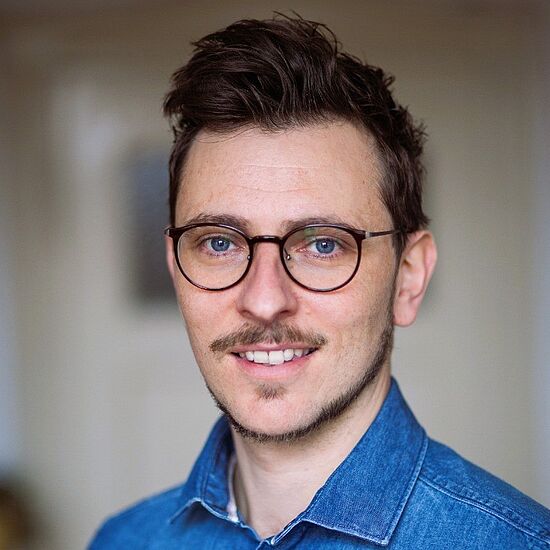
We are delighted to welcome Prof. Dr. Nils Köbis, who is a behavioral scientist working on corruption, (un-)ethical behavior, social norms and artificial intelligence (AI). He received my PhD from the Department of Experimental and Applied Psychology of the VU University of Amsterdam and completed a Post-Doc at the Center for Experimental Economics and Political Decision Making (CREED, University of Amsterdam).
He is also a co-founder of the Interdisciplinary Corruption Research Network (ICRNetwork.org) and the co-host of “KickBack - The Global AntiCorruption Podcast”.
He recently published an article in “Nature Portfolio”, raising pressing questions about accountability, ethics, and the need for robust guardrails in an AI-powered world.
Workshop 2: AI Delegation in Academia: Mapping Practice, Setting Guidelines, Imagining the Future
by Prof. Dr. Nils Köbis, University of Duisburg-Essen
This interactive workshop invites participants to reflect on and actively contribute to how AI is reshaping academic work. In the spirit of this year's theme, "Question Your Science," this workshop turns a critical eye on the growing role of AI in academic work. Rather than taking current practice for granted, it invites participants to interrogate their own habits of delegating academic tasks to AI, the collective norms that should govern such practices and where this trajectory is taking academia (especially in the social sciences) as a whole.
The first block explores how researchers are currently delegating academic tasks to AI, and how much they would want such delegation to happen at the level of the academic system as a whole. It will feature a short input on empirical insights into the psycholigical effects of delegation to AI (e.g. Köbis, Rahwan et al 2025; Purcell, Samuel, Köbis, & Bonnefon, 2026; Albers et al., 2026). Participants can try out a small set of AI research tools beforehand, grounding the discussion in concrete experience. Through individual reflection and group exchange, the session surfaces where personal practice and system-level preferences align or diverge.
The second block turns to the question of guidelines. Building on recent frameworks for AI use in research (Feuerriegel et al, 2026; Ontrup et al 2026) participants will work toward a small set of shared principles they would be comfortable seeing adopted within their own research groups.
The third block looks further ahead and discusses, based on recent work (Messeri & Crockett 2026; Wang, 2026) and the author's own ongoing perspective piece which parts of academic work are becoming AI-assisted and which should deliberately remain human-driven, and what this means for skill set early-career researchers will (most likely) need going forward. The discussion draws on labor economics, conceptualizing (academic) jobs as bundles of tasks that shift in composition.
The workshop aims not to close with a definite verdict on AI in academia, but with a useful set of questions (and guidelines) to carry back into our respecitve labs.
Gabriel Scheidecker
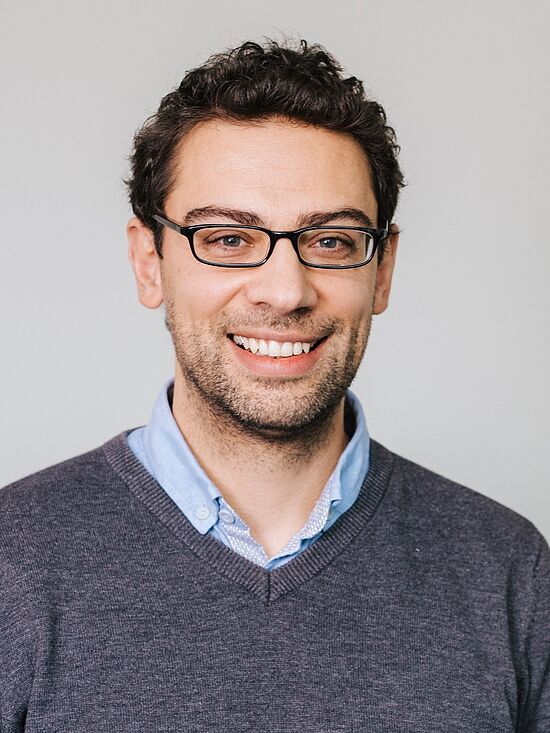
We are delighted to welcome Prof. Dr. Gabriel Scheidecker, who is an Assistant Professor in the Department of Social Anthropology and Cultural Studies at the University of Zurich and Principal Investigator of the SNSF Starting Grant project “Saving Brains?”.
His research focuses on childhood, childrearing, and the politics of parenting across diverse cultural and policy contexts. He has conducted ethnographic fieldwork in rural Madagascar on children’s social worlds and emotional socialization, and in Berlin on the experiences of children from Vietnamese migrant families and their interactions with child protection systems. His current work critically examines global Early Childhood Development (ECD) programs, challenging dominant scientific assumptions and exploring how ethnographic perspectives can contribute to ECD research and practice.
His publications highlight the role of children as social agents and question adult-centric approaches to ECD research and policy. He contributes regularly to debates on childhood and development in journals such as Current Anthropology, Ethos, and The Lancet.
Workshop 3: Challenging Common Assumptions through Ethnographic Research: Examples from Early Childhood Interventions in the Global South
by Prof. Dr. Gabriel Scheidecker, University of Zurich
In recent years, an increasing number of publications have questioned psychology and related sciences by pointing to severe Western, middle-class sampling biases. While this sampling bias has been widely discussed in terms of the universal validity of findings and theories in basic science, we will discuss how it might affect applied science and interventions, particularly how it might lead to unjustified deficit views of populations outside the middle class. As a concrete example, we will look at Early Childhood Development interventions in the Global South (Global ECD), a large field of international development and global health that aims to optimize child development, including through parenting interventions. We will focus on how optimal care is defined and measured and what might be problematic about these definitions and measurements given the Western sampling bias and available ethnographic research on the global diversity of childrearing practices and arrangements.
At the beginning of the workshop, Gabriel will give a brief introduction to Global ECD and some of its basic assumptions, as well as to his own PhD research on early childhood in Madagascar as an example of ethnographic evidence that challenges some of these assumptions, focusing particularly on socially distributed childcare. This input will prepare the ground for the subsequent discussion.
In the discussion, we will first jointly analyse how claims about widespread deficits in parenting and caregiving in low- and middle-income countries are produced. As an example, we will examine the measurement of inadequate care underlying one of the recent foundational articles for Global ECD: Draper et al. (2024), “The next 1000 days: building on early investments for the health and development of young children,” The Lancet, 404(10467), 2094–2116. In a final round, participants will have the opportunity to discuss potential assessment biases in their own areas of expertise and develop ideas for how these might be identified and reduced.
Academic Speed Dating
Networking facilitates success regarding our research goals and career. However, networking can also be tricky sometimes. Therefore BEACON 2026 is also dedicated to providing a low-barrier opportunity to foster academic interaction, create new ties, and initiate collaborations across departments and divisions. There will be different possibilities to reach this goal, for example during informal coffee breaks as well as during the apéro that completes the day. More important, however, will be the Academic Speed Dating. Over the course of 30 minutes, you will have three 10 minutes short academic speed dates with fellow researchers from other divisions.

Poster Session

PupilaPhotography
The conference offers a 1-hour Poster Session after lunch, which will be split into two parts: for the first 30 minutes, half of all presenters will be at their poster, and the other half of presenters will have a chance to go around and learn about the presenters’ works. Then we will switch: for the next 30 minutes, presenters become visitors, and visitors become presenters. The Poster Session is a chance to present your past, current, or planned research, so you can hand in preliminary data, real data, or also the study design. Finally, there will be three poster awards, where you get the chance to win a prize for the best poster in a specific category, rated by your colleagues at the conference! You can find all abstracts and more information here!